
What Actually Makes a Safari “Luxury”
Price alone doesn’t tell you much — here’s what we look at when we put a safari together for you:
– Your guide matters more than your camp. A brilliant guide in a modest camp will outperform an average guide in a five-star lodge every time.
– Private vehicles beat shared game drives. You set the pace, stay as long as you like at a sighting, and aren’t compromising with strangers’ preferences.
– Where the camp sits inside the ecosystem affects how much wildlife you see without long drives to reach it.
– “All-inclusive” varies a lot between camps — we check exactly what’s covered (drinks, laundry, transfers, activities) before you book, so there are no surprises.
– Smaller camps (8-12 guests) generally mean better service and a calmer atmosphere than larger lodges.
We do the groundwork on all of this before recommending a package, so you’re paying for the right things, not just a brand name.
Souqs, savannas, safaris and the Sahara – the heart of Africa is in its wildlife, cultures and breathtaking landscapes. Most of our clients are drawn to one of two regions: East Africa, home to the Great Migration, or Southern Africa, with its Big Five reserves and dramatic desert scenery. Here’s what you need to know about each.
East Africa: The Serengeti and the Masai Mara
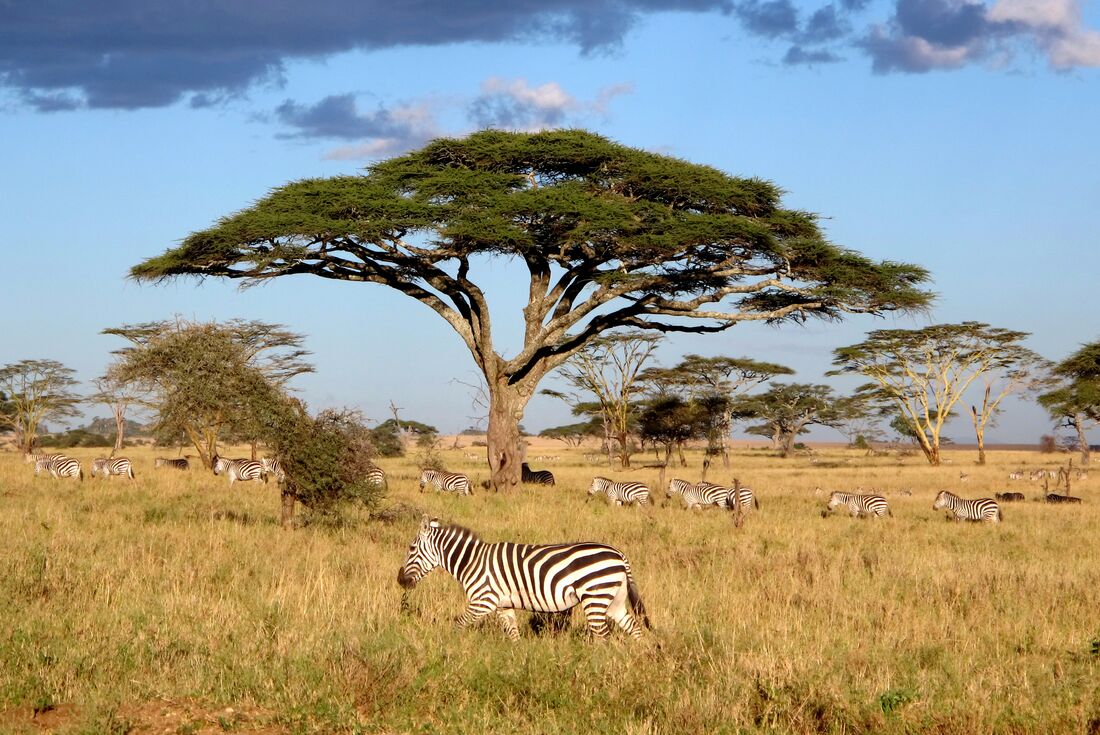
The Serengeti in Tanzania and the Masai Mara in Kenya share an unfenced border, and the wildebeest move continuously between them, following the rains and fresh grass. Roughly 1.5 million wildebeest, along with hundreds of thousands of zebra, eland and gazelle, are somewhere in this ecosystem all year round – there’s no single “migration season”, only different phases of it.
From December to March the herds concentrate on the southern Serengeti plains around Ndutu for calving season, when around half a million calves are born within a few weeks and predator activity is intense. From April to June they move north through the western corridor, crossing the Grumeti River. The Mara River crossings between Tanzania and Kenya run from July to October, with late August and early September offering the best odds – though the wildebeest cannot be scheduled, and any guide who promises a guaranteed crossing isn’t being straight with you.
Choosing between the two comes down to what you want. The Serengeti offers scale, remoteness and a genuine wilderness feel, with the central Seronera area holding strong resident wildlife year-round and the northern Serengeti the place to be for river crossings from July onwards. It combines naturally with Ngorongoro Crater and a Zanzibar beach extension. The Masai Mara is smaller and more concentrated, with private conservancies enforcing strict vehicle limits for genuinely exclusive game viewing, and it’s a shorter flight, which suits tighter itineraries. If your dates are flexible, combining a few nights in each gives the fullest picture – they’re complementary, not interchangeable.
Southern Africa: South Africa and Namibia
South Africa offers some of the most accessible luxury safari in the world. Kruger National Park and the private reserves of Sabi Sands give you the Big Five – lion, leopard, elephant, rhino and buffalo – with a choice of luxury lodges, expert guides and sunset game drives, and it pairs easily with a Cape Town or coastal extension.
Namibia is a different kind of safari: vast, dramatic and empty. The red dunes of Sossusvlei and the eerie, photogenic Deadvlei salt pan sit within the Namib-Naukluft National Park, while Etosha National Park delivers the wildlife-watching, built around a huge natural salt pan that draws game from miles around in the dry season.
Why book your safari through an agent
Safari camps all have their own websites now, and you can book direct from your kitchen table. What that approach usually misses is the dozens of small judgement calls that separate a good trip from a genuinely exceptional one: which guide has two decades of field knowledge rather than a nice website; which camps have access to the quieter river crossing points; which mobile camps reposition for calving season and need booking a year out. That’s the groundwork we do before we recommend anything.
Before your first safari
Fly, don’t drive, if you can help it. The flight from Nairobi to a Masai Mara airstrip takes around 45 minutes; the same journey by road takes five to six hours, and it’s longer still in the Serengeti. Charter luggage is restricted to soft bags of around 15kg, so plan your packing before you get to the airport, and pack for the environment, not the occasion – neutral colours are standard for good reason.
Tell us your dates and what matters most to you, and we’ll tell you where to be and which camps will position you correctly. Call us today on 01978 350850.